P-3 Orion Research Group
The Netherlands
this page was last updated on 27 January 2013
Lockheed Martin P-3 Orion Variants
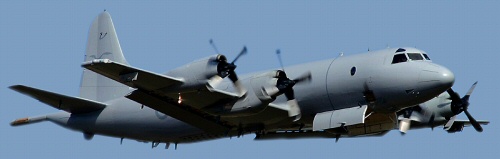
In addition to anti-submarine warfare missions the Orion proved to be a very suitable platform for numerous other tasks. Because of the large cabin a lot of equipment can be installed allowing the US Navy make use of the possibility to adapt P-3s into special mission platforms. They not only operated the three basic variants P-3A, B and C, they introduced dozens of modified Orions. The list of type designations has grown to over fifty different P-3 variants.
P3V-1 / P-3A
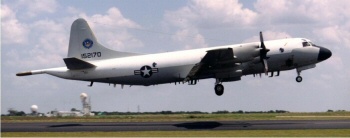
The first production variant of the Orion. During their operational life most aircraft were kept up-to-date with several modification projects. That's how the following type designations were introduced: the P-3A Deltic (Delayed Time Compression; with an improved sonobuoy reception and registration system), the P-3A DIFAR (Directional Frequency Analysis and Recording which was an update of sonobuoy receivers, data processing systems and tape recorder) and the P-3A TAC/NAV MOD (Tactical/Navigation Modernization; included the installation of a central computer, new tactical displays, IRDS and improved navigation systems).
P-3A / P-3B "Aerostar"
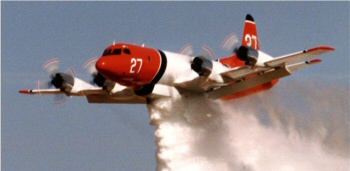
Aero Union has modified six P-3A Orions and one P-3B Orion into aerial fire fighters. The Aerostar has a retardant tank with a capacity of 3000 gallons. These aircraft are operated by Aero Union on behalf of the US Forestry Service.
P-3A "Slick"
US Customs variant for drug counter-operations. Four USN P-3A Orions were initially borrowed from the navy and later taken over by the US Customs Service. The aircraft were modified with IRDS and an AN/APG-63 lookdown radar like the one used on the F-15. The P-3A "Slick" aircraft are operated in cooperation with the P-3AEW&C "Blue Eagle" or "Dome" to locate and detect drug smugglers in small boats or aircraft. Some reference books call these aircraft UP-3A's or P-3A(CS), which is incorrect. The US Customs service is in the process of increasing its fleet of Orions and is expected to receive another ten "Slicks" over the next few years.
P-3ACH
After local modernization projects were completed to four aircraft of the Chilean Navy these were given a new type designation: P-3ACH. One of these (408) was changed into a staff transport aircraft with a pantry, two toilets, a Boeing 727 interior with 65 seats, a VIP room, sleeping facilities and a staff meeting room. Three others (402, 404 and 407) were fitted with a locally developed mission systems suite.
P-3AEW&C "Blue Eagle" / "Dome"
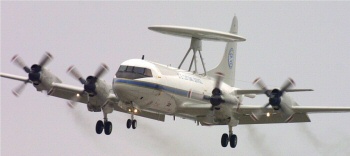
Lockheed developed an Airborne Early Warning & Control version of the Orion in the first half of the eighties. The prototype aircraft (a modified ex-RAAF P-3B) made its maiden flight on 14 June 1984 and was initially christened "Blue Sentinel". Lockheed's marketing department tried to sell the P-3AEW&C to military operators who could not afford to purchase the more sophisticated Boeing E-3 "Sentry". The US Customs Service is the only operator of the type (although the NRL operates a single NP-3D with a dome) and refers to the aircraft as "Hi-Tech Drug Hunter" or P-3 "Dome". The US Congress made money available to increase the USCS fleet of Domes; another ten aircraft are expected to augment the fleet of six P-3AEW&C's.
P-3AM
P-3A Orions, modernized for the Brazilian Air Force with the EADS/CASA Fully Integrated Tactical System (FITS) and with its T56-A-10 engines upgraded to T56-A-14’s. This variant is also referred to as P-3BR but Brazilian Air Force sources explained that the Brazilian P-3 program is called “P-3 BR”, while the correct type designation for the aircraft is P-3AM.
P-3B LW / P-3B HW
Second production variant of the Orion, respectively the P-3B Light Weight and the P-3B Heavy Weight. The Heavy Weight version has a strengthened structure and can carry a heavier payload. Just like the P-3A the P-3B was subject of several modification programs resulting in the P-3B DIFAR and the P-3B TAC/NAV MOD (for details see P-3A). The latter was also known as the "Super Bravo" or "Super Bee".
P-3C
Third standard version of the Orion which introduced major improvements in data processing because of the introduction of a powerful central computer. The mission suite was developed by the Naval Air Development Center during the A-NEW program which was tested on a P-3A with a 64 kB computer! Early P-3C's went through the TAC/NAV MOD like the P-3A and P-3B, resulting in the P-3C TAC/NAV MOD designation.
P-3C Updates
Then a series of update programs kept the mission equipment of the P-3C up-to-date. The different update configurations were installed in newly built aircraft but also retrofitted into older Charlies. Type designations: P-3C-I, P-3C-II, P-3C-II½ , P-3C-IIIR (Update III-modified older P-3C's). Between 1987 and 1992 Boeing worked on the Update IV package that was mentioned as a modification to all USN P-3C's. Eventually Update IV was cancelled because of problems with the budget and because of the changing international environment such as the end of the Cold War. P-3C-II¾ is an export variant of the Update III for the Pakistan Navy. Three aircraft were built for anti-ship missions and were equipped with Harpoon missiles and with an APS-134 radar. P-3C-III+ is an adapted production version for the Korean Navy, fitted with the APS-134 radar and an ASQ-212 central computer.
P-3C BMUP
The Block Modification Upgrade Program (BMUP) was started to modify P-3C-II½ Orions to a configuration with capabilities similar to the P-3C-III. This program replaced the P-3C-III retrofit program because many system components for the P-3C-IIIR variant were no longer available. For the USN BMUP conversions started in 1996 and a total of 25 were planned, ten of which were completed by July 2003. Dutch P-3C-II½ Orions received the BMUP upgrade at the start of their conversion to P-3C CUP standard.
P-3C AIP
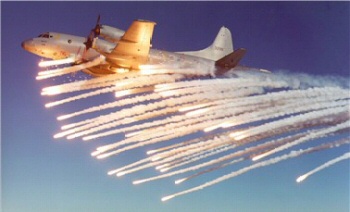
In order to keep up with the improving technology and to adjust the P-3 into a more versatile platform, able to conduct Anti Surface Warfare (ASuW) and overland missions, the USN launched the Anti surface warfare Improvement Program (AIP) for the P-3C's, featuring the introduction of chaff/flare dispensers, missile warning receivers, SATCOM, GPS, new ESM and an Electro Optical System (EOS). Aircraft modified with AIP are referred to as P-3C AIP. The original AIP variant (operational in April 1998) was fitted with the AVX-1 Cluster Ranger electro-optical system at the TACCO position’s window. This system was replaced in later AIP conversions (as of 1999) by the Wescam Advanced Imaging Multispectral System (AIMS), fitted in the FLIR turret below the nose radome. Other systems introduced in the P-3C AIP were the APS-137B(V)-5 radar, the ALR-66C(V)-5 ESM system (for which the dome-mounted spinning antenna below the center fuselage was introduced), the OASIS III over-the-horizon targeting system, ALE-47 chaff and flare dispensers, AAR-47 missile warning receivers, the ASQ-222 mission computer, INS, GPS and SATCOM.
P-3C CDU
In a separate program the USN had several Orions modified with an APG-66 fire control radar and an AN/AVX-1 Cluster Ranger EOS for Counter Drug operations. These aircraft are known as P-3C CDU for Counter Drug Upgrade.
P-3C CUP
Ten Dutch P-3C-II½ Orions went through such a program (the Capability Upkeep Program) just before being sold to Germany and Portugal; these aircraft are known as P-3C CUP Orions. New systems include an ASQ-227 central computer, the APS-137B(V)5 radar, ASQ-78B acoustic processing system, ALR-66C(V)3 ESM system and SATCOM. Seven aircraft got the complete CUP (all of these are sold to Germany), the other three got a limited CUP mission suite but have provisions and wiring for all CUP systems.
P-3C UIP
The Royal Norwegian Air Force's four P-3C-III Orions went through an almost similar program (the Update Improvement Program) during 1999/2000 and are called P-3C UIP ever since. New systems include the ASQ-212 central computer, APS-137B(V)-5 Inverse Synthetic Aperture Radar (ISAR), ALR-66C(V)5 ESM system, GPS and SATCOM.
P-3C "Outlaw Hunter" / OASIS I / OASIS II / OASIS III
The P-3C "Outlaw Hunter" (#159507) was the prototype aircraft for an Over-The-Horizon Targeting (OTHT) variant of the Orion. The aircraft is able to localise enemy targets from a large distance and coordinate attacks on these targets. The Outlaw Hunter was first successfully deployed during the Gulf War (1990/'91). Based on the experiences in the Gulf the equipment was further developed into the so-called Over-the-horizon Airborne Sensor Information System (OASIS), of which three versions can be recognized: OASIS I, OASIS II and OASIS III. The latter became part of the Anti surface warfare Improvement Program (AIP).
P-3D and P-3G
Stretched P-3C version with Update IV systems and new generation engines (designations were never actually used).
P-3F
Lockheed delivered six "half P-3B/half P-3C" Orions to the air force of Iran. These aircraft would originally only be fitted with mission systems for surface operations but when the US policy on the subject of export of advanced military equipment changed shortly before the delivery of these aircraft, a package of simplified ASW gear was installed. Some reference works mention the P-3F as being the only P-3 variant with an "In-flight Refuelling System" to enable the aircraft to refuel in the air. This is just a fairy tale. An aircraft like the Orion can remain in the air for a very long time and air refuelling in the area of responsibility for the Iranian P-3F Orions is not even necessary. The six aircraft were originally painted in a standard USN white over grey colour scheme but shortly before the ferry flight to Iran they were re-painted in an attractive three-tone blue camouflage scheme.
P-3H and Orion II
P-3C airframe with P-7A wings and engines, equipped with Update IV. This variant was meant as an alternative for the cancelled P-7A (designations were never actually used).
P-3J
Original designation for the Japanese Orions (designation never actually used).
P-3K
Under Project "Rigel" the RNZAF's five P-3B Orions were modified with Boeing-developed mission systems. The first aircraft was modified by Boeing at Seattle while Air New Zealand was responsible for the modification of the remaining aircraft. The first modified RNZAF P-3B made its maiden flight on 15 September 1983. The heart of the systems installed onboard is the Boeing Universal Display And Control System (UDACS). UDACS exists of tactical displays and control panels on all tactical stations. UDACS is able to cooperate with all general ASW systems and weapon systems. Besides UDACS the P-3B's were improved with a new radar system, an infrared system and Omega and inertial navigation systems. Upon completion of the modification program the aircraft were re-designated P-3K, with "K" for "Kiwi", the bird in New Zealand's national roundel. A sixth (former RAAF) P-3B aircraft was purchased in 1985 via Lockheed and modified up to P-3K standards. It was added to the fleet in 1986.
P-3M
Spanish Air Force P-3B modernized with the EADS/CASA Fully Integrated Tactical System (FITS).
P-3N
The Norwegian air force replaced its seven P-3B aircraft in 1989 by four P-3C-III's. Two P-3B's were kept on strength and were modified to P-3N's by the US Naval Aviation Depot (NADep) at NAS Jacksonville. The aircraft were fitted with P-3C flight deck systems and 30 passenger seats. The P-3N is used for training, transport, VIP transport and coastguard duties.
P-3P
Six ex-RAAF P-3B Orions purchased by Portugal were modified to P-3P's according to Portuguese and NATO specifications. Most of the mission systems installed were equal to the systems used in the P-3C-II½ but some are unique for the Portuguese aircraft. The tactical displays are of a different type and the search radar of the P-3P is the same one as used on the New Zealand P-3K. Remarkable is the ALR-66 ESM-system, fitted in a radome below the aft fuselage. Lockheed modified the first aircraft for Portugal and delivered the aircraft to the Portuguese Air Force in 1989. The remaining five aircraft were modified by the Oficinas Gerais de Material Aeronáutico (OGMA) at Alverca AB.
P-3T
Two Thai Orions, originally P-3A TAC/NAV MOD's were modified by NADep at NAS Jax with new navigation and communication systems, avionics and radar displays. The aircraft were wired for IRDS and Harpoon missile firing systems.
P-3W
Unofficial designation for RAAF P-3C-II½ (for maintenance purposes).
AP-3C
The Royal Australian Air Force P-3C Orion fleet originally consisted of ten P-3C-II and ten P-3C-II½ Orions. In 1993 the Sea Sentinel program (Project Air 5276) with the goal to replace the ageing mission equipment onboard of 18 aircraft, was launched. Raytheon Aircraft Integration Systems in Greenville, TX became the main contractor. Sea Sentinel replaces the data management system, radar, acoustic processing system, navigation system and communication systems. In order to increase the fatigue life of the RAAF Orion fleet, weight reduction was an incorporated goal in the program. Design engineers were successful in removing 3200 pounds from the aircraft. Raytheon completed the modification of the AP-3C prototype in May 1999 and the aircraft made its maiden flight on 19 May 1999. Boeing Australia at Avalon was responsible for the modification of the remaining 17 Orions.
CP-3A
USN specifications for the Advanced Base Support Aircraft (ABSA) were meant to designate a replacement aircraft for the Douglas C-118B Liftmaster. In 1984 a contract for the conversion of 30 P-3A Orions into CP-3A transport aircraft was signed with Lockheed Aircraft Services Co. in Ontario. The first flight was planned for 1985 and LAS would deliver nine aircraft during that year. The CP-3A would have been modified with a large cargo door, strengthened loading floors and new emergency exits. Shortly after the signing of the contract the Naval Air Systems Command changed the specifications for the "new" transport aircraft, resulting in the termination of the CP-3A project.
CP-3C
Original Canadian designation (designation never actually used).
CP-140 "Aurora"
Canadian version of the P-3C. There are almost no differences in the airframe but the Aurora is a completely different aircraft. It is a combination of the airframe of the Orion and the mission equipment suite of the S-3A Viking. A contract for the delivery of 18 Anti Submarine Warfare aircraft was signed by Lockheed and the Canadian government on 27 November 1975. The chosen P-3 variant was originally designated CP-3C Orion. Later its designation was changed into CP-140 while the aircraft was christened Aurora. The first flight of the Aurora was on 22 May 1979 and on 29 May 1980 (with a delay of more then a year) the first CP-140 (#140101) was handed over to the Canadian forces.
CP-140A "Arcturus"
Canada ordered three P-3C airframes from Lockheed in August 1989. These were delivered to IMP at Halifax in 1991. This company completed the three aircraft as CP-140A Arcturus patrol planes. These aircraft are primarily used for environmental and fishery surveillance, polar patrol, utility missions and flight crew training. The equipment of the Arcturus consists of an AN/APN-134+ search radar and communication systems only.
CT-140
Original designation for the CP-140A Arcturus (designation never actually used).
EP-3
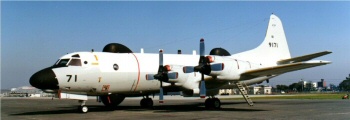
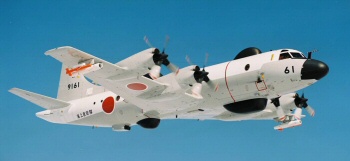
Kawasaki Heavy Industries developed this P-3 variant for ESM-missions. The first EP-3, which can be compared with the USN EP-3E, was taken in use with the JMSDF in March 1991. It is a very special kind of aircraft because of the various aerials and radomes below and on top of the fuselage. The JMSDF ordered a total number of five EP-3s. Some reference books call these aircraft EP-3C's, which is wrong.
EP-3A
Not every EP-3A had the same mission and not every EP-3A looked the same. A clear description of the EP-3A cannot be given for this reason. Some examples were externally almost equal to the normal P-3A Orion but others were modified with all kind of radomes and aerials, making them look like an EP-3E. The first EP-3A version was developed for electronic reconnaissance missions and was equipped with a very specialized mission equipment suite including several types of radar systems. The aerials were installed in radomes below the forward fuselage en the center wing. EP-3A #149673 operated successfully with the Naval Air Test Center (NATC), Naval Weapons Laboratory and VX-1. Other EP-3A’s operated with VAQ-33 and other USN units.
EP-3B "Batrack"
Two P-3A Orion aircraft were modified into this variant in 1969. The EP-3B was used to monitor Russian radar and radio signals. Both EP-3Bs were operated by VQ-1 and their primary missions included reconnaissance missions against Soviet ships in international waters. They were the forerunners of the later EP-3E. The Naval Research Laboratory (NRL) made use of a modified P-3B Orion (#153442). This EP-3B was used to test radar and electronic warfare systems, carried in three equipment pods below the weapons bay and an additional three pods on the standard wing hard points. Later this particular aircraft was redesignated NP-3D but it retained the same mission for a few years. Despite its EP-3B designation this aircraft was not a Batrack variant.
EP-3E ARIES / EP-3E "Deepwell"
The ARIES variant was introduced in 1970 and has been the most important electronic surveillance variant of the Orion for many years. The EP-3E was based on the P-3A and EP-3B and three versions were developed: three P-3As were modified with the ARIES mission systems and seven examples were modified with “Deepwell” systems. All ASW mission equipment was replaced with specialized electronic monitoring systems. Aerials of the radar signal analyser and various intelligence systems were installed in radomes below and on top of the fuselage and center wing.
EP-3E "ARIES II"
The third electronic surveillance version became known as the ARIES II. Twelve P-3Cs were fitted with the mission systems from the two EP-3Bs and the original ten EP-3Es. These aircraft replaced the original twelve aircraft in the fleets of VQ-1 and VQ-2, which all had reached the end of their operational life. The first EP-3E ARIES II (#156507) made its maiden flight on 11 April 1990. The first five test flights focused on the aerodynamic and flight characteristics of the modified P-3C. Full test flights, which included operational testing of the sophisticated mission equipment, started in May. Deliveries of the ARIES II were delayed by a discussion about consolidation of the missions of USAF RC-135 and USN EP-3E aircraft and by the relocation of the modification project from LASC Greenville to NADep Alameda and NADep Jacksonville.
EP-3J
VAQ-33 introduced two modified P-3B Orions to the fleet in 1992. These aircraft, which later were transferred to VP-66 and VQ-11, were operated as so-called “aggressors” during exercises with USN and NATO ships. Specialized equipment onboard of the EP-3J (“J” for “jammer”) enabled the crew to imitate the radar signature of a Tupolev Bear. This Orion variant was developed by Chrysler Technologies Airborne Systems Inc. and was fitted with an AN/USQ-133 communication intercepting and jamming system, satellite communication, radar disturbing systems and a chaff dispenser.
NP-3A
At least two P-3As, including the former YP-3A prototype aircraft, have been used for long term test and evaluation programs and were designated NP-3A Orions. In the early sixties the ex prototype has been used by NASA as the Gemini/Apollo spacecraft support aircraft.
NP-3B
Nothing much is known about this variant. Just one Orion (#152739) has been operated under this designation. It belonged to a “secret” unit called NAWC-23. It is thought that the aircraft was utilized for special projects in which NASA and Texas Instruments have been involved. NAWC-23’s home base is Dallas Love Field. The NP-3B was fitted with a large “banana-shaped” container below its fuselage, most likely containing a Side Looking Airborne Radar (SLAR) system. NAWC-23 later received a new aircraft (P-3C-III #161410) that was modified with the equipment container from the original NP-3B.
NP-3C
Kawasaki P-3 variant for radar calibration flights (designation never actually used; aircraft mission were incorporated in the UP-3C).
NP-3D
During 1994 the USN changed the type designations of several UP-3A, RP-3A, RP-3D and EP-3B aircraft into one general designation: NP-3D. The aircraft involved were so heavily modified that they would for sure never be brought back to the standard P-3A or P-3B standards. During SDLM the aircraft were fitted with new engines, standard flight deck instruments and a weather radar system. A very special variant within the fleet of NP-3Ds is the so-called “Billboard Orion” of the NWTS. These aircraft have a 3,65 x 1,83 m. aerial on top of the fuselage, just in front of the vertical stabilizer. These NP-3D's are supporting operational tests of guided missiles on the test ranges near NAS Point Mugu by making over-the-horizon telemetry data available for shore and ship based command centers.
OP-3C
The Japanese Maritime Self Defense Force unveiled its plans for the introduction of a small number of special observation platforms in 2001. Not much information regarding the equipment and missions of these aircraft have been released but it is understood that about six P-3C aircraft or will be modified by Kawasaki Heavy Industries for missions that are comparable to the highly classified missions conducted by USN VPU-1 and VPU-2 aircraft. The first aircraft is expected at 51 Kokutai for trials mid 2001 and planned for operational introduction with 81 Kokutai early 2002.
RP-3A
Two P-3A Orions were modified for the long term oceanographic, magnetic and acoustic projects of the former Airborne Oceanographic Development Squadron Eight (VXN-8) and designated RP-3A. As with the EP-3A several other aircraft with different missions and equipment were taken in use under the RP-3A designation, for example an RP-3A which was used for electronic reconnaissance experiments with the NRL.
RP-3D
During completion at the Lockheed production line the 51st P-3C was fitted with specialized equipment for atmospheric and magnetic research missions. Instead of the usual ASW systems the aircraft was fitted with specialized gear to map the earth’s magnetic field. Also additional navigation systems were installed: dual INS, Loran A and C (connected to a dual computer), Omega, satellite navigation and a gyro-stabilized sextant. Subsequently the aircraft was fitted with an extremely sensitive magnetometer and equipment for accurate timing. The aircraft’s weapons bay contained an additional fuel tank of 4543 litres which increased the total fuel capacity to 39369 litres. On 4 November 1972 this particular aircraft set a world distance record: it flew 10.103,51 km in 16½ hours. The former YP-3C prototype aircraft was later modified to RP-3D as a replacement for the original aircraft and an additional two P-3Bs were modified to RP-3D “minimod” aircraft to replace the RP-3As of VXN-8.
TP-3A
In the mid eighties the USN had to face a lack of P-3C capacity. Training squadrons VP-30 and VP-31 both made use of a number of Orions for flight crew training only. These full mission aircraft were sometimes doing touch-and-goes for days and days while the expensive ASW systems were not touched. To make more P-3C’s available for full mission duties a number of aircraft with VP-30, VP-31 and VP-MAU were replaced by P-3A’s. These Alphas were stripped of their ASW systems and modified with P-3C-II flight deck instruments. Redesignated TP-3A’s the aircraft were used for the training of flight deck crews.
TP-3C
Original plans called for the replacement of the TP-3A by modified P-3B’s taken from the desert storage at AMARC. Mid 1995 these plans changed into the temporary use of P-3Cs which had to go through AIP and SRP mod shops. For both the P-3B and P-3C option the TP-3C designation was reserved, but this designation has never been used.
TAP-3
Australian training and support variant of the P-3B. Besides the main mission of AP-3C flight crew training the TAP-3 Orions are also utilized for light cargo and transport duties in support of AP-3C operations. The three ex-USN aircraft were modified with an Update II½ flight deck, APN-234 weather radar, strengthened floor panels for 3450 lbs of cargo or 26 passenger seats and a High Capacity Cargo Pannier in the weapons bay.
UP-3A
At the end of the eighties several P-3A’s were stripped of their ASW systems and fitted with passenger seats and other minor adjustments to be used as transport and utility aircraft for some USN units and bases. UP-3A #150506 is a partial VIP bird. In 1993/94 eight former USN P-3As were delivered to the Chilean Navy as UP-3As.
UP-3B
When the operational squadrons started to retire large numbers of P-3B’s this version became available for other duties too. The UP-3B was modified for duties similar to those of the UP-3A.
UP-3C
Kawasaki variant developed as a training and support aircraft for the EP-3. In 1991 the JMSDF ordered two UP-3C’s. Shortly thereafter the radar calibration mission of the NP-3C was added to the UP-3C and the NP-3C was never actually built. The first UP-3C made its maiden flight in 1995.
UP-3D
This version was also developed by Kawasaki. It is used as an ESM-trainer for the ships of the JMSDF and its missions are comparable to the USN EP-3J.
UP-3E
Original designation for the OP-3C (designation never actually used).
UP-3S
Unofficial designation for the UP-3A prototype aircraft.
UP-3T
The utility variant of the P-3A in Royal Thai Navy service. This aircraft’s designation was later changed into VP-3T.
VP-3A
Three WP-3A Orions, retired by VW-4 in 1975, were modified to VIP-Orions. Later a fourth and fifth aircraft (modified P-3As) were added to the staff transport fleet. The VP-3A has a large pantry, comfortable passenger seats, TV, stereo and video systems and sleeping facilities.
VP-3T
VIP bird for the Royal Thai Navy. This single aircraft has an added limited surveillance mission for which it is fitted with a SENTAC-station. This station contains elements of sensor station 3 (IRDS and radar) and the TACCO station.
WP-3A
During the 1969 “Replacement Weather Reconnaissance Aircraft Tests” (RWRAT) out of NAS Bermuda the USN tested both the P-3 Orion and C-130 Hercules in rough weather conditions to appoint a suitable replacement weather reconnaissance aircraft for the Lockheed WC-121s of Weather Reconnaissance Squadron Four (VW-4). A decision was taken in favour of the Orion and by the end of 1970 Lockheed Aircraft Services Ontario delivered the first WP-3A Orion to the NATC. WP-3A’s were stripped of their MAD boom and fitted with large belly radomes below the forward fuselage. When VW-4 was disestablished in 1975 the WP-3A Orions were retired. Later on the aircraft were modified to other variants.
WP-3D
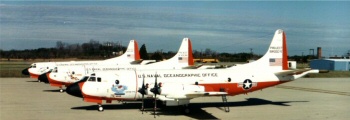
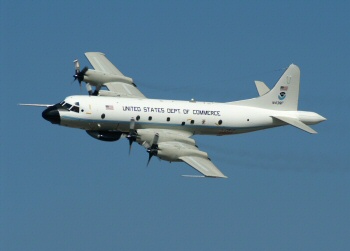
The National Oceanographic & Atmospheric Administration (NOAA) of the US Department of Commerce received two WP-3D Orions in 1975/76. The aircraft were purchased through a USN program so they received both military and a civil registrations. The WP-3D is based on the P-3C airframe and has a larger tail boom and a belly radome. Furthermore the aircraft is fitted with all kinds of aerials, sensors and a large pitot tube. It can operate independent of support facilities because a large set of spare parts (including a complete set of additional flight deck instruments and a spare generator) is carried onboard.
YP3V-1 / YP-3A
Prototype of the P3V-1/P-3A Orion.
YP-3C
Prototype of the P-3C Orion.
LRAACA
Long Range Air ASW Capable Aircraft; was the temporary designation for a P-3C replacement aircraft.
P-7A
New designation for LRAACA (project cancelled; type designation never actually used).
Orion 2000
New technology Orion variant based on the P-3C with P-7A engines and mission equipment suite. This variant was offered to the RAF as a Nimrod replacement.
Orion 21
Further improved Orion 2000 variant based on either newly built P-3C or second hand P-3 airframes.
P-3 Procyon
A program launched by Raytheon E-Systems during 2000. Based on second hand P-3 airframes.
Valkyrie
Combined Loral / E-Systems program based on second hand P-3 airframes. Was offered to the RAF as a possible Nimrod replacement aircraft.
© P-3 Orion Research Group / 1997 - 2017